

Ho’oponopono and Grief: Healing Relationships, Loss, and Inner Parts Through a Hawaiian Practice and Emdr Therapy in North Carolina and Virginia
For clients in Virginia and North Carolina seeking trauma-informed healing
Grief is not limited to death. Many people in Virginia and North Carolina come to therapy grieving relationships that ended, connections that changed, or the painful ways they speak to themselves internally.
Sometimes grief shows up as:
-
The end of a marriage or partnership
-
Estrangement from family
-
Betrayal or narcissistic abuse
-
Losing the version of yourself you used to be
-
The harsh inner voice that keeps replaying old wounds
One practice that has helped many people process relational pain is Ho’oponopono, an ancient Hawaiian practice centered around restoration, responsibility, and healing relationships.
Combined with trauma therapies like EMDR and approaches like Internal Family Systems (IFS), Ho’oponopono can become a powerful framework for repairing both external relationships and the internal ones we carry inside ourselves.
What Is Ho’oponopono?


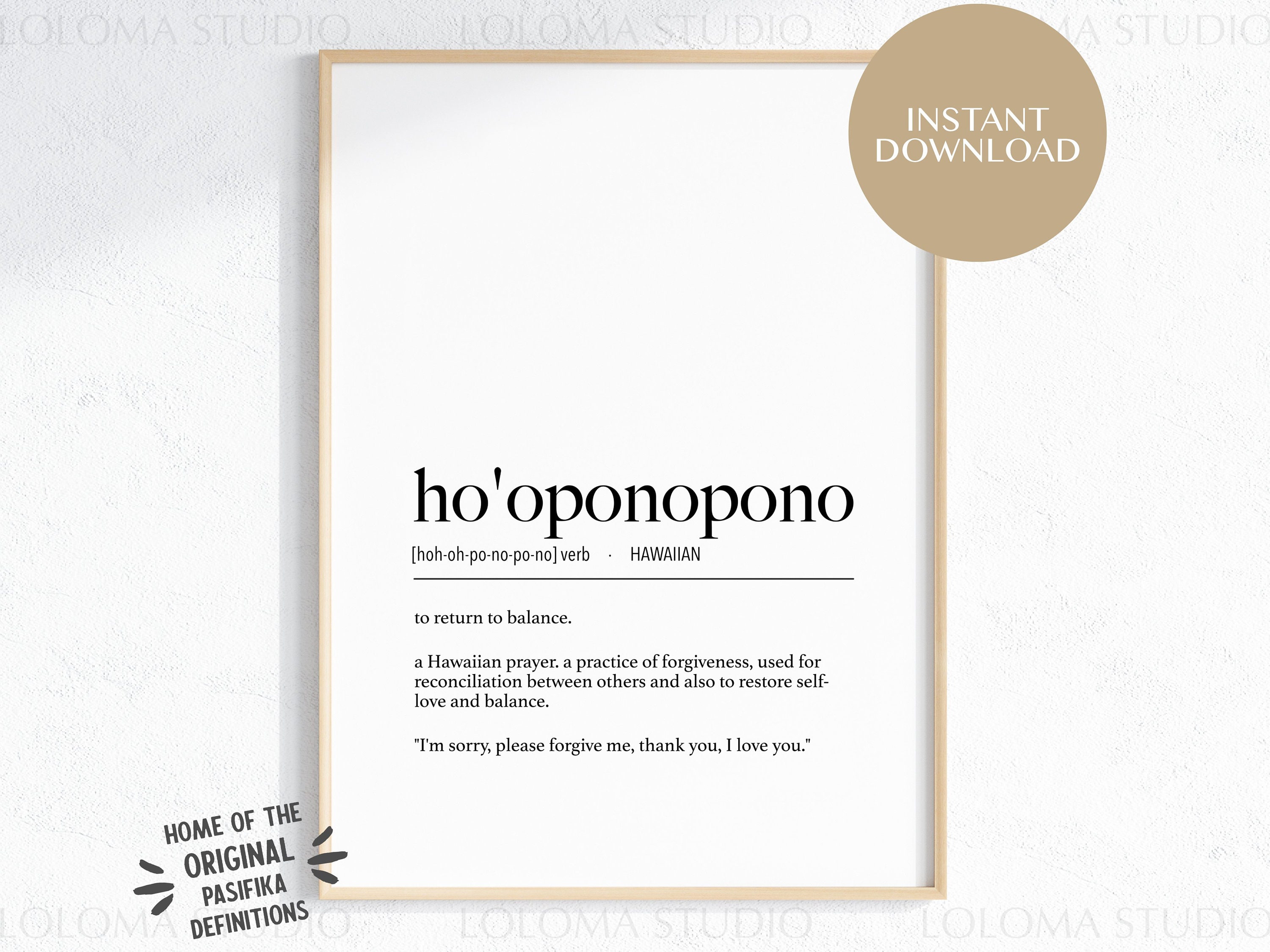
Ho’oponopono (pronounced ho-oh-pono-pono) is a traditional Native Hawaiian practice of reconciliation and forgiveness.
The word itself can be translated roughly as:
“To make things right.”
Historically, Ho’oponopono was practiced within Hawaiian families when conflict or harm occurred. A respected elder or spiritual leader would guide the process. Family members would gather to:
-
Acknowledge harm
-
Speak truthfully about what happened
-
Take responsibility
-
Offer forgiveness
-
Restore harmony within the group
In Hawaiian belief systems, unresolved conflict was thought to create spiritual and emotional imbalance not only for individuals but for the whole family system.
The goal of Ho’oponopono was not blame.
It was restoration of harmony.
The Four Phrases of Ho’oponopono
Modern adaptations of Ho’oponopono often focus on four simple phrases that capture the spirit of the original practice:
-
I’m sorry
-
Please forgive me
-
Thank you
-
I love you
These phrases can be repeated as a meditation, prayer, or reflection when working through grief, resentment, or painful memories.
Each phrase represents a step in emotional repair.
1. I’m Sorry
This is not about self-blame. It’s about acknowledging that pain exists.
You might say this to another person:
“I’m sorry for the hurt between us.”
Or internally to a part of yourself:
“I’m sorry you had to carry this alone.”
In Internal Family Systems, this might be directed toward a wounded part that has been ignored or judged.
2. Please Forgive Me
Forgiveness here is not about excusing harm. It is about releasing the emotional grip of the past.
Sometimes we are asking another person for forgiveness.
Other times we are asking ourselves.
Many people in therapy discover they are carrying deep shame tied to trauma or relationships that ended badly. This phrase gently opens the door to compassion.
3. Thank You
Grief often hides lessons or protective strategies that once helped us survive.
In IFS language, even painful coping behaviors often started as protective parts trying to keep us safe.
“Thank you” honors the role these parts played.
Examples might include:
-
Thanking a part that learned to shut down emotionally
-
Thanking a protective anger that kept you from further harm
-
Thanking a younger self who survived something overwhelming
4. I Love You
This phrase may be the most powerful.
For many people struggling with grief or trauma, the hardest person to say “I love you” to is themselves.
But when spoken internally, this phrase can become a corrective emotional experience.
You might say:
-
“I love you” to a younger wounded part
-
“I love you” to a version of yourself still grieving
-
“I love you” to the part that feels broken
Healing often begins when self-rejection turns into self-compassion.
Ho’oponopono and Grief
Grief often contains unfinished conversations.
Things we wish we had said.
Apologies we never received.
Words we wish someone had spoken to us.
Ho’oponopono creates space for those conversations internally.
You might direct the phrases toward:
-
Someone who passed away
-
A partner who left
-
A parent who hurt you
-
The version of yourself that was harmed
In therapy, many clients use the phrases during visualization exercises or journaling to process unresolved emotional ties.
How EMDR Therapy Can Help With Grief
Eye Movement Desensitization and Reprocessing (EMDR) is a trauma therapy designed to help the brain reprocess painful memories so they no longer feel emotionally overwhelming.
When grief is tied to traumatic memories, EMDR can help people process experiences such as:
-
Betrayal or relational trauma
-
Narcissistic abuse
-
Sudden loss or complicated grief
-
Childhood emotional wounds
During EMDR, clients revisit distressing memories while engaging in bilateral stimulation (such as eye movements or tapping). This process helps the brain integrate memories so they become less emotionally charged.
Many clients find that after EMDR sessions, they are better able to engage with practices like Ho’oponopono because the emotional intensity has softened.
Instead of being stuck in anger or shame, they can approach the phrases with genuine compassion.
Healing Your Inner Relationships
In Internal Family Systems (IFS) therapy, we understand that the mind contains many “parts.”
Some parts hold grief.
Some parts carry anger.
Some parts try to protect us by shutting down or staying hyper-vigilant.
Ho’oponopono can be used as a compassionate dialogue with these inner parts.
For example:
To a wounded child part:
-
I’m sorry you were hurt.
-
Please forgive me for ignoring your pain.
-
Thank you for surviving.
-
I love you.
When people begin speaking to themselves this way, something profound often shifts.
The inner world becomes less hostile.
Healing becomes possible.
Therapy for Grief in Virginia and North Carolina
If you’re struggling with grief, trauma, or painful relationship patterns, therapy can help you move toward healing.
Many people find relief through approaches that combine:
-
EMDR therapy
-
Internal Family Systems (IFS)
-
Compassion-based practices like Ho’oponopono
-
Trauma-informed grief work
Whether the grief comes from loss, betrayal, or difficult family relationships, healing is possible.
You Don’t Have to Carry Grief Alone
Grief can make people feel isolated, ashamed, or stuck in cycles of painful memories.
But healing happens in connection — with others and with the compassionate parts of ourselves.
Sometimes it begins with four simple phrases:
I’m sorry.
Please forgive me.
Thank you.
I love you.
Over time, those words can transform the way we relate to others and to ourselves.
EMDR Therapy for Clients in Virginia and North Carolina
If you’re looking for EMDR therapy for grief, trauma, or relationship wounds in Virginia or North Carolina, trauma-informed therapy can help you process painful memories and reconnect with yourself.
Healing doesn’t erase the past.
But it can change how the past lives inside you.
Click here to schedule a session https://coastalclaritypsychotherapy.com/
https://insighttimer.com/joannaalbrecht/guided-meditations/ho-oponopono-original-long-version-prayer
Share this story

Carter Bain, LCSW is a Virginia Beach based psychotherapist offering online EMDR and intensives for individuals and couples.