
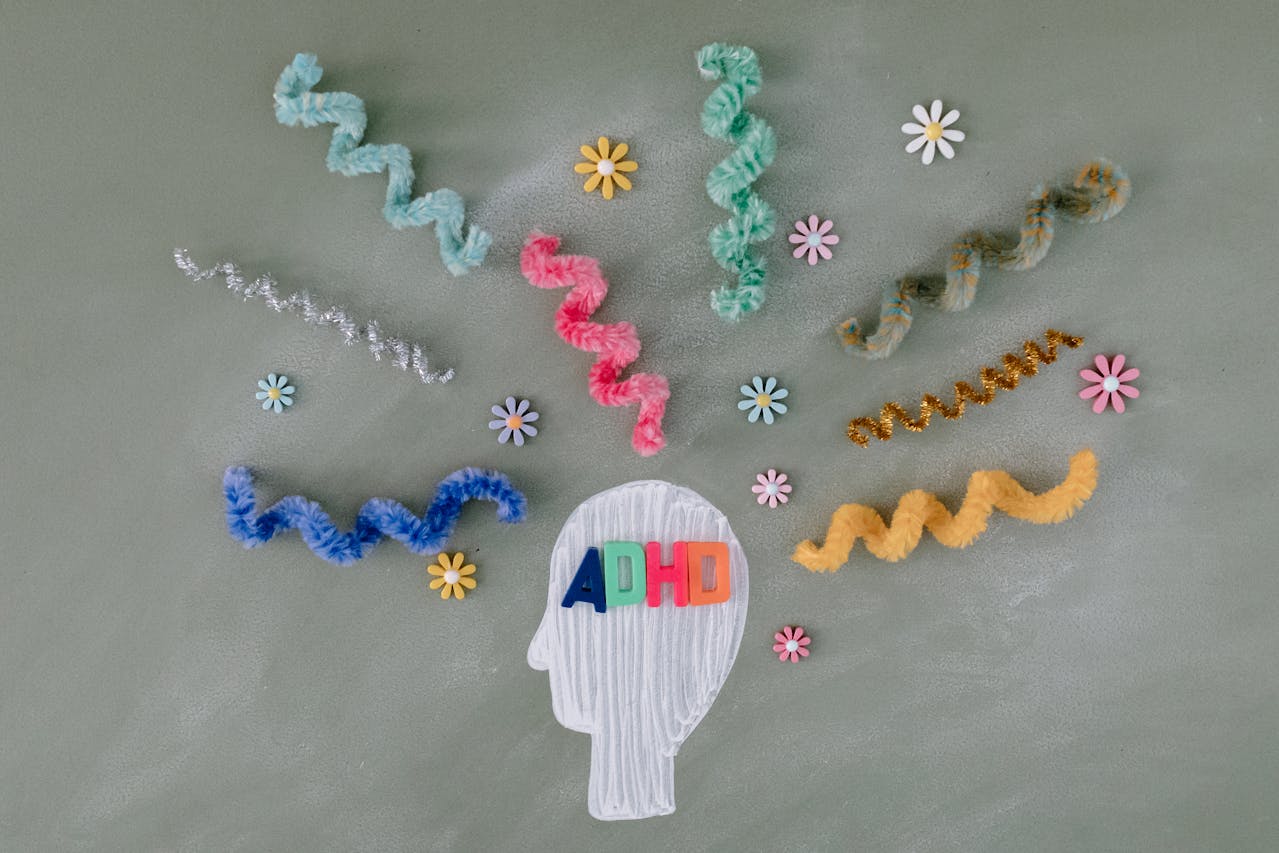
ADHD isn’t a lack of focus. It’s a brain that focuses on everything all at once.
It’s the forgotten appointment, the pile of half-finished projects, the days where motivation feels impossible — and the nights where your mind won’t stop running.
If you live with ADHD, you probably know the exhaustion that comes from constantly trying to “do better.” You’ve heard the words lazy, disorganized, scattered, or unmotivated. Maybe you’ve internalized them.
But ADHD isn’t a moral failure. It’s a neurobiological difference — and with understanding, structure, and self-compassion, it’s absolutely manageable.
What ADHD Really Is
ADHD (Attention-Deficit/Hyperactivity Disorder) is a neurodevelopmental condition that affects the brain’s executive functioning — the part responsible for focus, organization, time management, and emotional regulation.
It’s not that you don’t care — it’s that your brain struggles to prioritize what to care about in the moment. Dopamine, the neurotransmitter responsible for motivation and reward, functions differently in ADHD brains, which means sustained effort on non-interesting tasks feels physically harder.
Common ADHD Symptoms
-
Difficulty focusing or sustaining attention
-
Forgetfulness, losing items, or missing details
-
Restlessness or trouble sitting still
-
Impulsivity — blurting things out or acting before thinking
-
Procrastination until the last possible moment
-
Time blindness — underestimating how long things take
-
Overwhelm with multitasking or transitions
Uncommon (But Very Real) ADHD Symptoms
-
Emotional dysregulation: Mood swings, rejection sensitivity, or frustration that feels disproportionate
-
Hyperfocus: Getting so absorbed in one task that hours disappear
-
Perfectionism: Overcompensating to hide perceived flaws or chaos
-
Decision paralysis: Overthinking simple choices
-
Low self-esteem: Feeling “broken” or behind everyone else
-
Burnout: Constantly pushing to “act normal” until you crash
For many, ADHD is invisible. It’s not loud or disruptive — it’s quiet, internal chaos. It’s the guilt of knowing what to do but being unable to start.
The ADHD Shame Cycle
ADHD often comes with a lifetime of misunderstood feedback:
“You’re too much.”
“Why can’t you just focus?”
“You’d be unstoppable if you tried harder.”
Over time, those messages create internalized shame — the belief that you’re lazy, broken, or unreliable. That shame feeds the negative chatter loop:
“I’ll never get it together.”
“Everyone else seems to handle life better.”
“What’s wrong with me?”
The truth: nothing’s wrong with you. You’re wired differently, not defectively.
Breaking the ADHD Thought Loop
One powerful strategy for interrupting the mental noise is using the technique described in Ethan Kross’s book “Chatter.”
🧠 Try “Cross Talk” Instead of Self-Talk:
-
Instead of saying, “I’m such a mess,” say, “You’re doing your best.”
-
Instead of “I can’t focus,” try, “You’re overwhelmed, not incapable — let’s start small.”
Using second-person language activates the brain’s self-distancing mechanism, reducing emotional intensity and increasing rational problem-solving.
Combine that with a grounding breath or body scan, and your mind and body start syncing back into regulation.
Regulation: The Foundation of Focus
ADHD brains need movement, novelty, and dopamine to regulate. Try these small, sustainable tools to reset your focus and energy:
🔹 1. Body Before Brain
Move first. Walk, stretch, or do 10 jumping jacks before starting a task. Physical activation helps your brain release dopamine and norepinephrine.
🔹 2. Externalize Everything
ADHD brains don’t hold information well in working memory — so write it down. Use whiteboards, phone reminders, sticky notes, or apps like Notion or Todoist.
🔹 3. Timeboxing
Set a 10- or 20-minute timer and start small. Most ADHD paralysis breaks once you begin.
🔹 4. Dopamine Pairing
Pair a boring task with a pleasurable one — like listening to music, lighting a candle, or drinking coffee while doing chores.
🔹 5. Visual Cues
Keep important items visible. If it’s “out of sight,” it’s “out of mind.”
🔹 6. Transitions Matter
ADHD brains struggle with switching gears. Use rituals between activities — deep breaths, a short walk, or even washing your hands to reset.
The Role of Medication (and Why It’s Not a Shortcut)
Medication can be life-changing for people with ADHD — but it’s not magic or one-size-fits-all. Stimulant and non-stimulant options help balance neurotransmitters like dopamine and norepinephrine, making focus and regulation more accessible.
But medication works best when paired with behavioral tools, movement, and emotional support. Always work with a licensed doctor or psychiatrist to find what’s right for your body and health history.
The Power of Meditation and Mindfulness
Traditional meditation can feel impossible for ADHD brains — sitting still and “emptying your mind” isn’t realistic. Instead, try mindful grounding through motion:
-
Walking meditations (focus on footsteps and breath)
-
Guided visualizations or body scans
-
Breathwork with music or movement
-
Creative meditation (painting, gardening, stretching)
Mindfulness is less about stillness and more about presence — learning to notice your thoughts without judging them.
When ADHD Meets Trauma: The Role of Brainspotting and EMDR
Many adults with ADHD also carry CPTSD or trauma. The constant shame, rejection, and overwhelm of living in a world not built for your brain can leave emotional scars.
Brainspotting
Helps release the tension, frustration, and grief your body holds around “never being enough.” It can help you process old moments of embarrassment, overwhelm, or failure without reliving them — calming the nervous system from the inside out.
EMDR
Helps reprocess the negative beliefs wired into your brain by years of misunderstanding — turning “I’m broken” into “I’m learning.”
By targeting the emotional charge of past memories, EMDR creates space for self-acceptance and clarity — both essential for thriving with ADHD.
Final Thoughts
ADHD isn’t a lack of willpower. It’s a difference in wiring.
You don’t need to fix yourself — you need tools, understanding, and compassion for the way your brain works.
When you stop fighting your brain and start supporting it — with movement, mindfulness, structure, Brainspotting, EMDR, or medication — you begin to realize something powerful:
You were never behind. You were always doing your best with what you had.
The goal isn’t to be “normal.” It’s to be regulated, creative, and alive in your own way. 💙
schedule here https://coastalclaritypsychotherapy.com/
https://www.nimh.nih.gov/health/topics/attention-deficit-hyperactivity-disorder-adhd
Share this story

Carter Bain, LCSW is a Virginia Beach based psychotherapist offering online EMDR and intensives for individuals and couples.