
Chasing the Ghost: How My Obsession with Red Drum Rewired My Brain
There is something inherently absurd about standing knee-deep in the salt-washed waters off the Outer Banks or Virginia’s Eastern Shore, whispering encouragement to a shrimp-tipped hook as if it were a high-stakes hostage negotiator.
To the casual observer, it’s just fishing. To me, it was a battle against a silent, silver ghost—the Red Drum. For months, this journey was defined not by the pull of a line, but by the crushing weight of “not yet.”
The Anatomy of a Cognitive Distortion
There were countless mornings at 4:00 AM, gear loaded, when I sat in my driveway and almost turned the engine off. The internal monologue was relentless:
-
“Everyone else is catching them; I’m just fundamentally unskilled.” (Labeling)
-
“If I don’t catch one today, the whole trip is a failure.” (All-or-Nothing Thinking)
-
“The conditions are perfect, so if I don’t catch one, I never will.” (Catastrophizing)
These weren’t just excuses; they were cognitive distortions—the same mental traps we learn to dismantle in DBT (Dialectical Behavior Therapy) and EMDR (Eye Movement Desensitization and Reprocessing).
Just as EMDR helps us process the “stuck” points of past trauma, I had to stop letting the “trauma” of a dozen skunked outings dictate my future performance. I applied DBT’s Opposite Action: when my brain told me to stay in bed because I was “destined” to fail, I grabbed my rod and drove to the water anyway. I learned to tolerate the distress of the empty cooler without letting it define my self-worth.
Moving Beyond the “Lucky” Narrative: The SMART Strategy
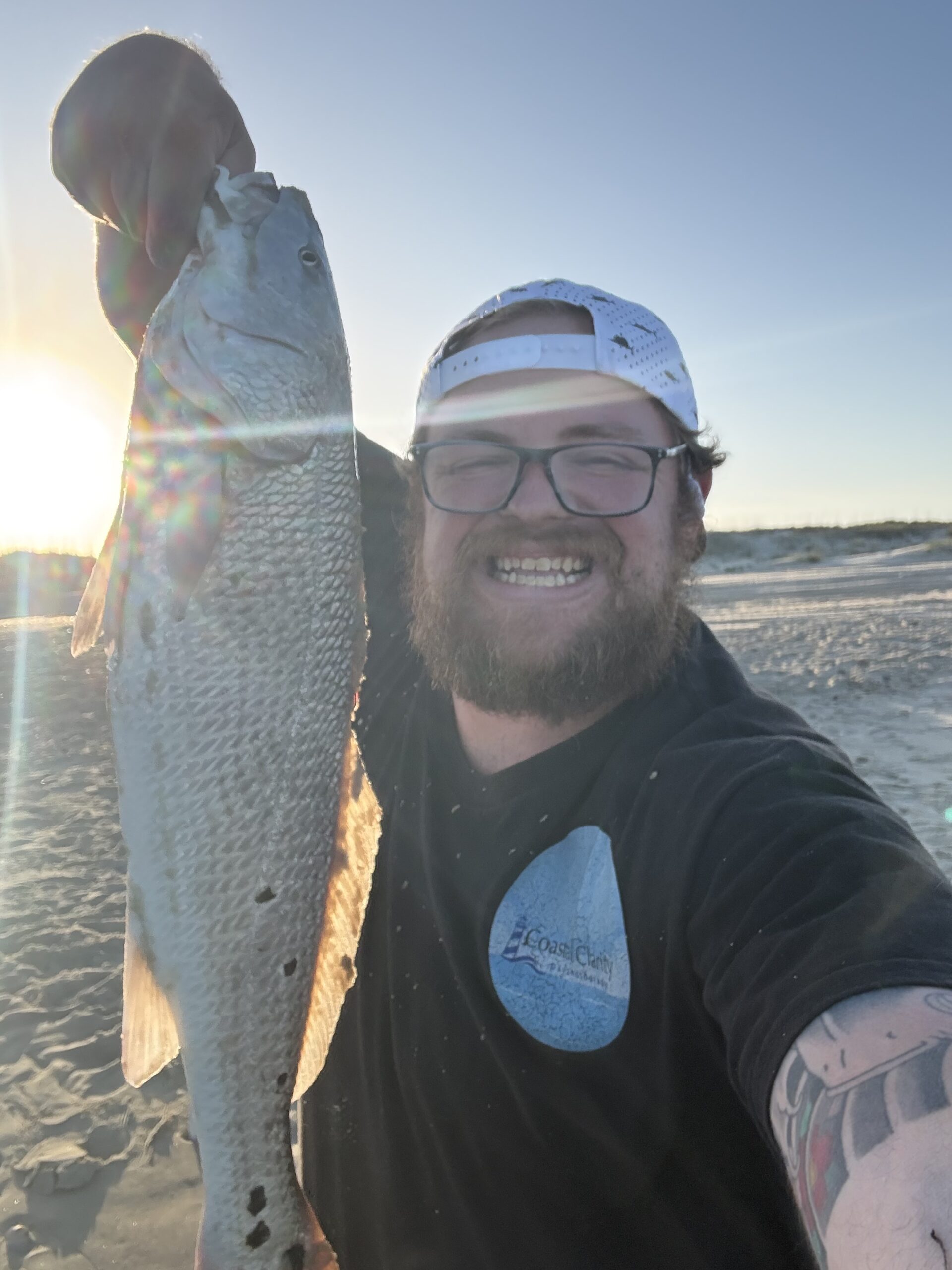
When I finally felt that thunderous, heavy drag-screaming run—my first citation-worthy Red Drum—the crowd on the beach cheered as if I’d won a tournament. But here is the truth: it wasn’t luck.
I had treated this journey like a SMART Goal:
-
Specific: I narrowed my focus from “catching fish” to “landing a slot-sized Red Drum.”
-
Measurable: I logged every tide, wind speed, and water temperature.
-
Achievable: I stopped fishing random hours and started targeting the “Golden Hour” of tide shifts.
-
Relevant: I aligned my gear to the specific bait-run patterns of the OBX.
-
Time-bound: I gave myself a full season of consistent effort, not just a weekend.
I didn’t just “go fishing.” I studied. I failed. I adjusted. The catch was the result of a scientific process, not a roll of the dice.
The Art of the After: Why the Destination Matters
We are often told “it’s about the journey, not the destination.” But that’s only half-true. If you never reach the destination, the journey is just a long, exhausting hike.
The real magic happened after the celebration. Once that fish was safely released back into the surf, I didn’t immediately reach for my phone to check the weather for the next trip. I sat on the sand. I watched the water.
I practiced gratitude. When we spend our lives chasing the “next personal best,” we lose the ability to belong to the moment we are currently in. The accomplishment—that moment of victory—is the validation of the hard work. It is the reward for the days you didn’t quit.
By honoring the struggle and appreciating the silence after the catch, I realized that I wasn’t just fishing for a Red Drum. I was fishing for the version of myself that could handle failure without quitting, and success without becoming hollow.
The next time you’re out on the OBX, fighting the wind and the doubt, remember: the fish is just the punctuation mark. You are the one writing the story.
How has your own journey with a specific goal—fishing or otherwise—challenged your internal narrative, and what was the hardest part about slowing down to appreciate the win once you finally achieved it?
click here to schedule a fishing and therapy journey https://coastalclaritypsychotherapy.com/
Share this story

Carter Bain, LCSW is a Virginia Beach based psychotherapist offering online EMDR and intensives for individuals and couples.