
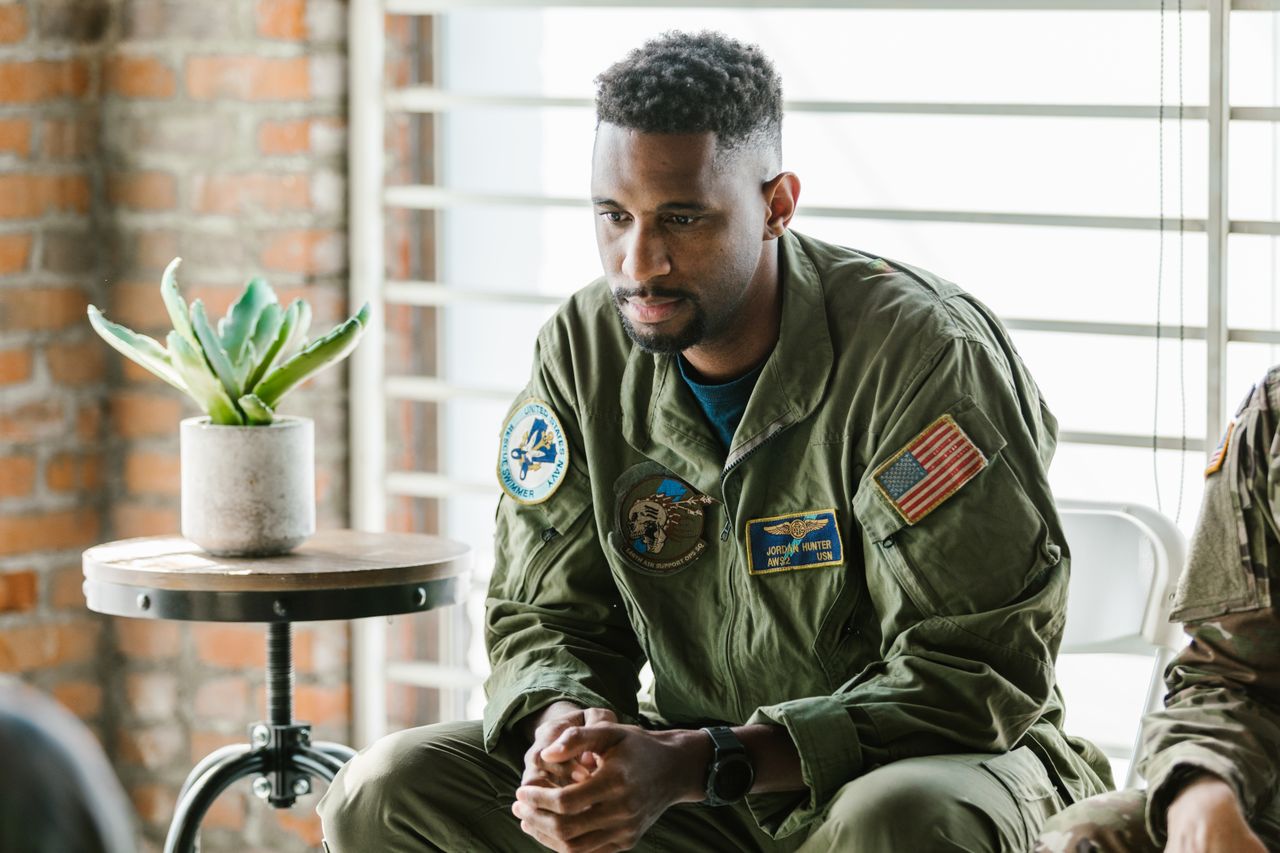
There is a particular kind of loneliness that many veterans know but rarely talk about.
It’s not the loneliness of being physically alone. It’s the loneliness of standing in a crowded room surrounded by family, friends, and people who care about you, yet feeling like you’re on a different planet.
You came home.
But part of you never did.
For many veterans living with PTSD, the hardest battle begins after the uniform comes off.
The military teaches you how to survive. It teaches vigilance, discipline, and how to stay ready when lives depend on it. Those skills can keep you alive in combat. But when the mission ends, the nervous system often doesn’t get the message.
Years later, you may still find yourself scanning exits in restaurants. Sitting with your back against the wall. Waking up in the middle of the night from dreams that feel more real than the present moment. Getting angry faster than you want to. Feeling numb when you wish you could feel connected.
You may have learned to hide it well.
Many veterans do.
On the outside, life appears normal. A career. A family. Responsibilities. Yet internally, there is a constant tension running beneath everything. A feeling that the threat is never fully gone.
The Cost of Living on High Alert
Hypervigilance is exhausting.
When your nervous system remains stuck in survival mode, even ordinary moments can feel unsafe. Crowds become overwhelming. Fireworks become unbearable. Traffic triggers frustration that seems to come from nowhere.
Many veterans describe feeling like they are always “on.”
Always watching.
Always assessing.
Always waiting for something bad to happen.
The problem isn’t weakness.
The problem is that your brain learned lessons during traumatic experiences that it never had the opportunity to fully process.
The body remembers.
The mind remembers.
And sometimes those memories show up as flashbacks, nightmares, panic, anxiety, emotional numbness, depression, substance use, relationship struggles, or a sense of being disconnected from everyone around you.
What often hurts the most isn’t just the trauma itself.
It’s the feeling that nobody understands.
The Loss Nobody Talks About: Camaraderie
One of the deepest wounds many veterans carry isn’t discussed enough.
It’s the loss of belonging.
In the military, there is a mission. A structure. A purpose. A team that understands without explanation.
You know who has your back.
You know where you fit.
Then one day, that world is gone.
Civilian life can feel confusing and disconnected. Conversations seem shallow. People complain about things that feel insignificant compared to what you’ve witnessed.
You may find yourself missing the very environment that caused some of your pain because it also gave you purpose and brotherhood.
That loss is real.
Grief doesn’t only happen when someone dies.
Sometimes grief is mourning the person you were before trauma. Sometimes it’s grieving the identity you had in service. Sometimes it’s grieving the relationships and sense of purpose left behind.
Why Traditional “Talking About It” Doesn’t Always Work
Many veterans spend years trying to push through PTSD.
Some avoid discussing it altogether.
Others have sat in therapy sessions explaining their experiences repeatedly but still feel trapped by them.
This happens because trauma is not simply stored as a story.
Trauma is stored throughout the nervous system.
A loud sound doesn’t just remind you of something.
Your body reacts as if the danger is happening right now.
Your heart races.
Your muscles tense.
Your breathing changes.
Your entire system shifts into survival mode before your logical brain has time to catch up.
This is where EMDR therapy has helped many veterans experience meaningful healing.
How EMDR Helps the Brain Reprocess Trauma
Eye Movement Desensitization and Reprocessing (EMDR) is an evidence-based trauma therapy designed to help the brain process experiences that have become “stuck.”
Traumatic memories are often stored differently than ordinary memories.
Instead of feeling like something that happened in the past, they continue to feel present.
EMDR helps the brain reprocess these experiences so they can be stored in a healthier way.
The goal isn’t forgetting.
The goal isn’t pretending it never happened.
The goal is being able to remember without reliving.
Veterans often describe a shift where memories that once triggered overwhelming emotional and physical reactions begin to lose their intensity.
The event remains part of their history, but it no longer controls their present.
This process can help reduce:
- Flashbacks
- Nightmares
- Hypervigilance
- Anxiety
- Panic responses
- Shame
- Survivor’s guilt
- Emotional numbness
- Negative beliefs about oneself
Many veterans report that after successful EMDR treatment, they finally feel like they can take a full breath again.
Nervous System Regulation: Teaching the Body That the War Is Over
Healing from PTSD is not only about changing thoughts.
It’s also about helping the body feel safe again.
Nervous system regulation plays a critical role in trauma recovery.
When the nervous system has spent years operating in fight, flight, freeze, or shutdown states, it can forget what calm feels like.
Recovery involves helping the body learn a new pattern.
This may include breathwork, grounding techniques, movement, mindfulness practices, and developing awareness of physical sensations before they escalate into overwhelming reactions.
The goal isn’t becoming passive.
The goal is flexibility.
A regulated nervous system can respond when danger exists and relax when danger is absent.
That is freedom.
DBT Skills: Practical Tools for Everyday Battles
Many veterans also benefit from Dialectical Behavior Therapy (DBT) skills.
DBT provides practical strategies that can be used in real-world situations when emotions become overwhelming.
These skills help strengthen:
- Emotional regulation
- Distress tolerance
- Mindfulness
- Communication
- Relationship effectiveness
For veterans navigating reintegration, DBT skills can be especially valuable.
Learning how to tolerate intense emotions without shutting down or exploding can improve relationships, reduce conflict, and create greater stability at home and work.
These aren’t just therapy techniques.
They’re tools for daily life.
Reintegration: Finding Your Place Again
One of the greatest myths about PTSD is that healing means becoming the person you were before trauma.
That’s not the goal.
You cannot erase what you’ve experienced.
You cannot unknow what you’ve seen.
Healing is not about going backward.
It’s about building a future where trauma is no longer in command.
Reintegration means learning how to bring all parts of your story together.
The warrior.
The parent.
The spouse.
The leader.
The survivor.
The human being beneath the armor.
For veterans across Virginia, North Carolina, and the Outer Banks, the journey of healing often begins with a simple realization:
You do not have to carry everything alone.
Strength is not silence.
Strength is facing what you’ve spent years avoiding.
Strength is allowing yourself to heal.
You Deserve More Than Survival
Many veterans become experts at surviving.
The mission gets completed.
The responsibilities get handled.
The bills get paid.
Life moves forward.
But survival is not the same thing as living.
If PTSD has left you feeling disconnected, exhausted, angry, numb, or trapped in memories that refuse to let go, healing is possible.
EMDR therapy, nervous system regulation, and evidence-based approaches like DBT offer more than symptom relief.
They offer the possibility of coming home to yourself.
Not the version of you that existed before trauma.
The version of you that emerges after facing it.
The war may be part of your story.
It does not have to be the ending.
please check out this blog on nervous system regulation https://coastalclaritypsychotherapy.com/regulating-a-dysregulated-nervous-system-somatic-grounding-techniques-you-can-use-at-home-carterbainlcsw-virginia/
Share this story
Carter Bain, LCSW is a Virginia Beach based psychotherapist offering online EMDR and intensives for individuals and couples.